In modern high volume wood furniture manufacturing, finishing curved, carved and irregular workpieces has long been one of the most frustrating bottlenecks for factory managers. Many workshops still rely heavily on manual sanding workers to handle non flat profiles such as wooden door frames, chair components and carved cabinet parts. Manual sanding brings obvious drawbacks: inconsistent surface quality, huge labor consumption, slow cycle time and high rework rate caused by human fatigue. As labor costs keep rising across North America, Europe and Southeast Asia, more woodworking factories are shifting toward automated solutions represented by the Flexible Irregular Sanding Machine to solve profile finishing pain points once and for all.
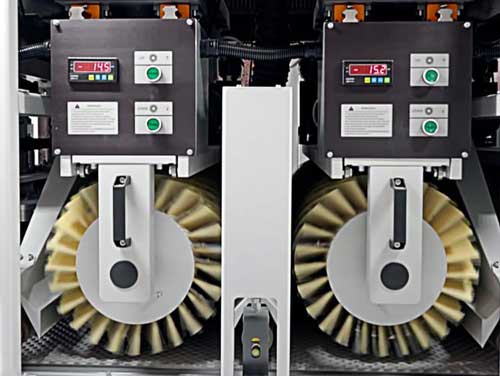
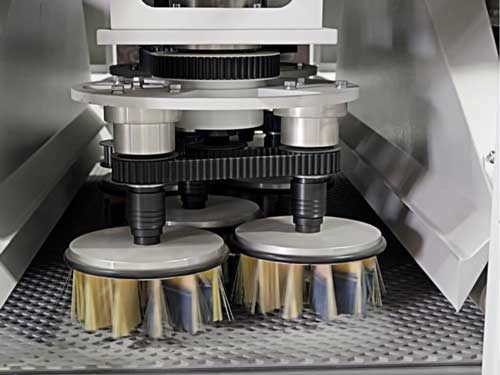
The core competitiveness of this type of machine lies in its modular sanding unit architecture. Different from traditional fixed pressure wide belt sanders that can only process flat panels, each sanding axle inside the flexible irregular sander supports independent lifting adjustment and independent speed regulation. Operators can set different pressure and rotating speed for each group of grinding shafts according to workpiece material complexity, wood hardness and contour depth. This mechanism effectively controls sanding force, avoids over sanding on raised curved areas and insufficient polishing on concave grooves, and greatly stabilizes finished part quality. The variable frequency drive system delivers smooth speed switching without mechanical shock, which extends the service life of abrasive consumables and mechanical assemblies.
For factories doing mixed order production, modular design creates outstanding flexibility. Production teams can freely combine sanding modules according to actual orders, matching different sanding requirements for solid wood components, composite doors and craft style furniture. Instead of purchasing multiple dedicated profile sanders, one main machine platform can realize multiple process configurations, which optimizes workshop floor space utilization and lowers overall equipment investment threshold. In actual user cases from Kuaimo Tech, furniture factories adopting GP1300 A series flexible sanding machines cut manual sanding head count by more than 60%, while finished product pass rate increased from around 72% to above 94%.
When evaluating a Flexible Irregular Sanding Machine, factory buyers need to focus on several practical indicators besides price. First, confirm whether every sanding group supports truly independent lifting and speed adjustment rather than synchronous collective movement. Second, check the frame welding standard: heavy duty rectangular profile welded frames guarantee long time high load operation without vibration caused defects. Third, verify the convenience of sanding paper replacement and daily maintenance access. Good designed machines allow operators to complete abrasive change within several minutes, minimizing production downtime.
Many buyers confuse flexible irregular sanders with ordinary brush sanding devices. Brush type machines mainly create textured surface effects, while flexible irregular sanders focus on material removal, contour calibration and fine finishing of complex solid wood workpieces. If your factory frequently produces curved wooden doors, shaped chair parts or carved furniture, upgrading automated flexible sanding equipment brings clear ROI within one and a half to two year payback period. With mature variable frequency sanding control technology, modern flexible sanding equipment has become standard configuration for mid to high end wood furniture workshops worldwide.