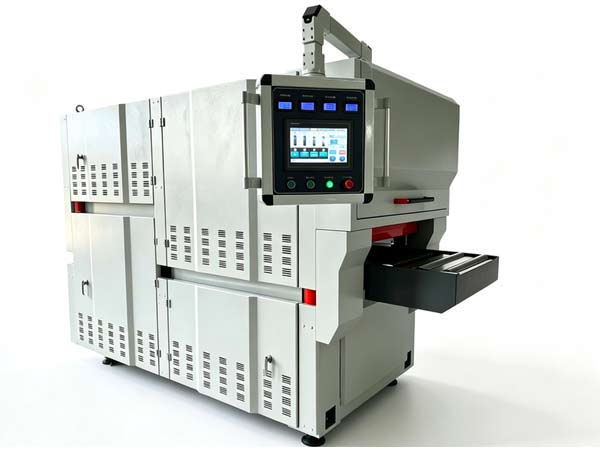
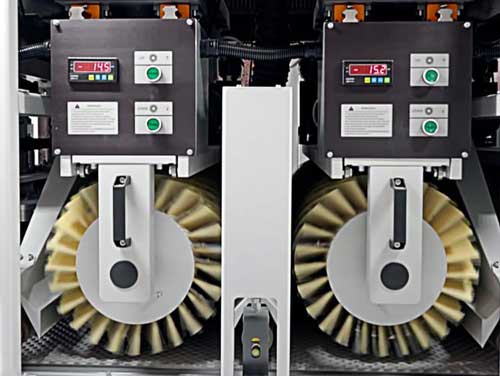
Even high-grade Industrial Wood Sander will encounter various small-faults during long-term continuous production. If workshop-technicians grasp basic wood sander troubleshooting knowledge and standard woodworking machine daily upkeep specification, most ordinary-faults can be solved on-site rapidly, minimizing production-downtime loss. Meanwhile correct sanding–belt maintenance tips extend abrasive-consumable service-life and cut operating-cost effectively.
The most-frequent fault is sand-belt deviation / wandering. Multiple possible causes lead to this symptom: roller surface accumulates excessive wood-dust residue; tension-pressure of sand-belt two-sides is unbalanced; conveyor-bed horizontal-position drifts; or mechanical-roller bearing appears abnormal-wear. Troubleshooting sequence: first power-off for safety, clean dust and wood-chip deposit on driving-roller and driven-roller. Then check sand-belt tension adjustment. If deviation still occurs, inspect bearing running-condition and conveyor-level-status. Do not continue forced-running under sand-belt-wandering situation; otherwise sand-belt will tear-up and even scratch whole batch-work-pieces.
Second common issue: uneven sanding-effect across workpiece surface. Work-piece partial area appears insufficient-polishing or over-sanding. Causes may include: sand-belt partial-wearing-out; sanding-roller pressure-unbalance; conveyor-belt surface sticking thick wood-debris; machine-frame generating vibration from loose-fastening-bolts. Solving steps: replace worn-out sand-belt; check and reset pressure-parameter of each sand-unit; clean conveyor-belt surface completely; inspect all main-frame bolt-tightness.
Third frequent-phenomenon: machine reports-alarm and conveyor-bed automatically drops down. For sanders equipped with fault-auto-drop-down-protection, this is safety-trigger-response instead of equipment-break-down. Usual trigger-reasons: air-supply-pressure insufficient; sand-belt serious-deviation signal triggered; emergency-stop-button pressed accidentally. Technicians should check air-compressor working-status, inspect sand-belt running-track and reset emergency-stop-switch, then restart machine after removing hidden-trouble.
Daily-maintenance routine cannot be ignored. Every-shift-end operators need to clean wood-dust and residual-chips inside machine cavity, especially around sand-units, rollers and sensor-positions. Accumulated dust not only influences processing-quality, but also brings fire-hazard risk. Regularly check bearing lubrication-condition, pneumatic-component air-leak and bolt-loosen-situation. Follow sanding–belt maintenance tips: store spare sand-belts in cool-dry environment, avoid folding-crease deformation. Install sand-belt with proper-tension: too-high tension accelerates belt fatigue-damage; too-low tension causes slipping-scratch on work-piece.
Remind operators strictly follow safety-operation specification. Carry-out maintenance work only after complete power-cut-off. If encountering complex-fault which cannot be solved by-on-site-team, contact equipment-supplier’s technical-support instead of blind-disassembling. Good daily-maintenance habit can greatly prolong whole-machine service-life of your Industrial Wood Sander.
CTA: Kuaimo Tech provides English-language maintenance-manual and technical-consulting service for our machine clients.