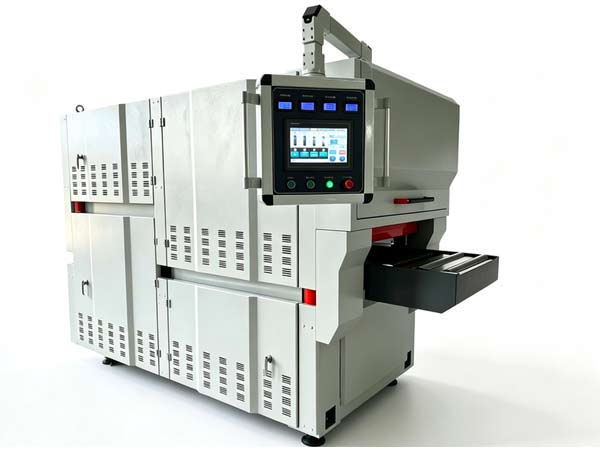
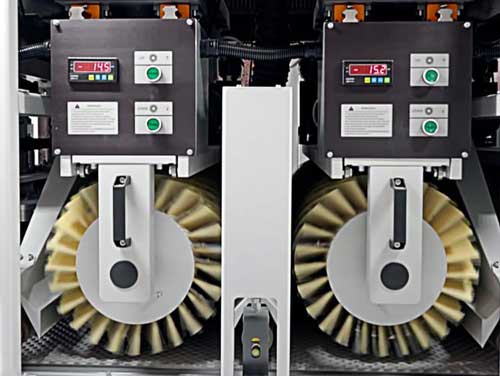
Labor shortage and rising worker salary are common tough challenges for furniture manufacturers across North America, Europe and Southeast Asia. Skilled manual-sanding workers are getting harder and harder to recruit and retain. Manual sanding also brings unstable quality, high rework rate and occupational-health risk from long-term dust exposure. Deploying proper Wood Sanding Equipment is one core solution to realize automated woodworking upgrade, reduce reliance on manual workers and lift furniture manufacturing productivity steadily.
Traditional manual sanding mode needs abundant experienced workers. Even well-trained workers produce inconsistent finishing result due to physical fatigue, mood difference and personal operation habit. One worker’s output capacity is limited. When order quantity surges, factories face huge pressure of recruiting temporary staff. After introducing automated sanding machines, one operator can supervise multiple-sets of equipment simultaneously. Machine runs stably day-shift and night-shift without fatigue, output keeps consistent batch-to-batch. It achieves obvious labor–cost reduction.
However, automation upgrade does not mean buying the most-expensive multi-functional machines blindly. Factories should match equipment configuration according to their own main-product categories. Factories mainly producing flat wooden-doors and plain panels can prioritize wide-belt calibrating sanders and primer sanders. Enterprises producing large-quantity curved carved furniture should invest in flexible irregular sanding machines. Factories processing rough spliced-raw-boards need to consider adding planer-sander. Blind pursuit of excessive-functions will raise unnecessary purchasing cost and bring complicated operation burden.
Many small-and-mid-size factories worry about technical-threshold after introducing automated equipment. Modern industrial wood-sanding machines adopt human-friendly control interface. Parameter-preset function allows technicians to save process-recipe for classic-product models. When producing repeat-orders, operators can call pre-saved parameter profiles directly without repeated complex debugging. Professional equipment suppliers should provide operation-training, video-guidance and remote-technical-support, which is an important factor when choosing machinery-vendor besides machine-price.
Market research data shows that many furniture factories which completed sanding-automation transformation obtained 30-55% productivity improvement and 40-65% drop on sanding-related-defect rate. Kuaimo Tech supplies full-series wood-sanding solutions covering flexible irregular sanders, wide-belt calibrating sanders, primer sanders, planer-sanders and wire-brushing machines. Whether customers need single-stand-alone machine or whole-set production-line layout, our engineering team can provide targeted proposal.
Under the background of global-labor-resource tension, automation-transformation is not only large-enterprise patent. Reasonable phased-equipment-upgrading also brings tangible benefit for mid-and-small-size furniture-making enterprises.
CTA: Contact Kuaimo Tech, get free-of-charge automation-transformation assessment for your wood-working workshop.